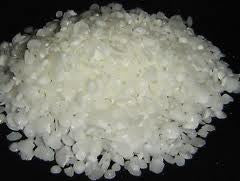
Palmitic Acid 98% min
Palmitic Acid 98% min
EDENOR® C16-98 MY
Cosmetic & Technical grade
Palmitic acid is one of the most common naturally occurring saturated fatty acids, widely found in animals, plants, and microorganisms. It was first isolated from palm oil (hence the name).
Palmitic acid is a 16-carbon saturated fatty acid that is solid at room temperature, chemically stable, and versatile. It plays roles in biology, and industry, with key applications in cosmetics, soaps, surfactants, and pharmaceuticals.
-
IUPAC name: Hexadecanoic acid
-
Formula: C₁₆H₃₂O₂
-
Molecular weight: 256.43 g/mol
-
Structure: A straight-chain saturated fatty acid with 16 carbon atoms (CH₃–(CH₂)₁₄–COOH).
-
Type: Long-chain saturated fatty acid (LCFA).
Chemical Properties
-
Functional groups: Carboxylic acid group (–COOH), hydrocarbon chain.
-
Acidity (pKa): ~4.8 (weak acid).
-
Reactivity:
-
Can form esters (fatty acid esters) with alcohols.
-
Can be saponified with alkali to produce soaps.
-
Can undergo hydrogenation/oxidation reactions.
-
Relatively stable to oxidation compared to unsaturated fatty acids.
-
Physical Properties
-
Appearance: White crystalline solid or powder; can appear waxy.
-
Odour: Faint, characteristic fatty smell.
-
Melting point: ~61–63 °C
-
Boiling point: ~351 °C (decomposes).
-
Solubility:
-
Insoluble in water (hydrophobic tail dominates).
-
Soluble in ethanol, ether, chloroform, and hot alcohol.
-
-
Density: ~0.85 g/cm³ (at 20 °C).
Uses of Palmitic Acid
-
Cosmetics & personal care
-
As emollient, thickener, or opacifying agent in creams, lotions, and soaps.
-
Its salts and esters (e.g., isopropyl palmitate) are widely used as moisturizers and skin conditioners.
-
-
Soap & detergents
-
Sodium palmitate (from saponification) is a classic soap ingredient.
-
Provides hardness and foaming stability.
-
-
Industrial uses
-
As a precursor for lubricants, surfactants, and plasticizers.
-
Used in manufacturing fatty alcohols, esters, and metallic soaps (e.g., calcium palmitate for stabilizers).
-
-
Pharmaceuticals
-
Used as an excipient in drug formulations.
-
Palmitic acid derivatives can modify drug solubility or release profile.
-
-
Biological role
-
A major energy source when metabolized.
-
Involved in palmitoylation (a post-translational protein modification important for membrane anchoring).
-
PLEASE NOTE: This product is not for human or animal consumption.
Comparison of Palmitic, Stearic, and Oleic Acid
| Property | Palmitic Acid | Stearic Acid | Oleic Acid |
|---|---|---|---|
| IUPAC Name | Hexadecanoic acid | Octadecanoic acid | (9Z)-Octadec-9-enoic acid |
| Formula | C₁₆H₃₂O₂ | C₁₈H₃₆O₂ | C₁₈H₃₄O₂ |
| Type | Saturated fatty acid | Saturated fatty acid | Monounsaturated fatty acid (ω-9) |
| Carbon chain length | 16 | 18 | 18 |
| Double bonds | 0 | 0 | 1 (cis at C9–C10) |
| Molecular weight | 256.43 g/mol | 284.48 g/mol | 282.47 g/mol |
| Melting point | ~61–63 °C | ~69–70 °C | ~13–14 °C |
| State at room temp (20–25 °C) | Solid (waxy) | Hard solid (more crystalline) | Liquid (oily) |
| Solubility | Insoluble in water, soluble in ethanol, ether | Insoluble in water, soluble in ethanol, ether | Insoluble in water, soluble in organic solvents |
| Stability | Stable (no double bonds) | Stable (no double bonds) | Less stable (double bond prone to oxidation/rancidity) |
| Typical sources | Palm oil, animal fats, butter | Cocoa butter, shea butter, tallow | Olive oil, canola oil, nuts |
| Biological note | Most common saturated FA in humans | Second most common, less atherogenic | Considered "heart-healthy" fat |
Original: $19.04
-65%$19.04
$6.66Product Information
Product Information
Shipping & Returns
Shipping & Returns
Description
Palmitic Acid 98% min
EDENOR® C16-98 MY
Cosmetic & Technical grade
Palmitic acid is one of the most common naturally occurring saturated fatty acids, widely found in animals, plants, and microorganisms. It was first isolated from palm oil (hence the name).
Palmitic acid is a 16-carbon saturated fatty acid that is solid at room temperature, chemically stable, and versatile. It plays roles in biology, and industry, with key applications in cosmetics, soaps, surfactants, and pharmaceuticals.
-
IUPAC name: Hexadecanoic acid
-
Formula: C₁₆H₃₂O₂
-
Molecular weight: 256.43 g/mol
-
Structure: A straight-chain saturated fatty acid with 16 carbon atoms (CH₃–(CH₂)₁₄–COOH).
-
Type: Long-chain saturated fatty acid (LCFA).
Chemical Properties
-
Functional groups: Carboxylic acid group (–COOH), hydrocarbon chain.
-
Acidity (pKa): ~4.8 (weak acid).
-
Reactivity:
-
Can form esters (fatty acid esters) with alcohols.
-
Can be saponified with alkali to produce soaps.
-
Can undergo hydrogenation/oxidation reactions.
-
Relatively stable to oxidation compared to unsaturated fatty acids.
-
Physical Properties
-
Appearance: White crystalline solid or powder; can appear waxy.
-
Odour: Faint, characteristic fatty smell.
-
Melting point: ~61–63 °C
-
Boiling point: ~351 °C (decomposes).
-
Solubility:
-
Insoluble in water (hydrophobic tail dominates).
-
Soluble in ethanol, ether, chloroform, and hot alcohol.
-
-
Density: ~0.85 g/cm³ (at 20 °C).
Uses of Palmitic Acid
-
Cosmetics & personal care
-
As emollient, thickener, or opacifying agent in creams, lotions, and soaps.
-
Its salts and esters (e.g., isopropyl palmitate) are widely used as moisturizers and skin conditioners.
-
-
Soap & detergents
-
Sodium palmitate (from saponification) is a classic soap ingredient.
-
Provides hardness and foaming stability.
-
-
Industrial uses
-
As a precursor for lubricants, surfactants, and plasticizers.
-
Used in manufacturing fatty alcohols, esters, and metallic soaps (e.g., calcium palmitate for stabilizers).
-
-
Pharmaceuticals
-
Used as an excipient in drug formulations.
-
Palmitic acid derivatives can modify drug solubility or release profile.
-
-
Biological role
-
A major energy source when metabolized.
-
Involved in palmitoylation (a post-translational protein modification important for membrane anchoring).
-
PLEASE NOTE: This product is not for human or animal consumption.
Comparison of Palmitic, Stearic, and Oleic Acid
| Property | Palmitic Acid | Stearic Acid | Oleic Acid |
|---|---|---|---|
| IUPAC Name | Hexadecanoic acid | Octadecanoic acid | (9Z)-Octadec-9-enoic acid |
| Formula | C₁₆H₃₂O₂ | C₁₈H₃₆O₂ | C₁₈H₃₄O₂ |
| Type | Saturated fatty acid | Saturated fatty acid | Monounsaturated fatty acid (ω-9) |
| Carbon chain length | 16 | 18 | 18 |
| Double bonds | 0 | 0 | 1 (cis at C9–C10) |
| Molecular weight | 256.43 g/mol | 284.48 g/mol | 282.47 g/mol |
| Melting point | ~61–63 °C | ~69–70 °C | ~13–14 °C |
| State at room temp (20–25 °C) | Solid (waxy) | Hard solid (more crystalline) | Liquid (oily) |
| Solubility | Insoluble in water, soluble in ethanol, ether | Insoluble in water, soluble in ethanol, ether | Insoluble in water, soluble in organic solvents |
| Stability | Stable (no double bonds) | Stable (no double bonds) | Less stable (double bond prone to oxidation/rancidity) |
| Typical sources | Palm oil, animal fats, butter | Cocoa butter, shea butter, tallow | Olive oil, canola oil, nuts |
| Biological note | Most common saturated FA in humans | Second most common, less atherogenic | Considered "heart-healthy" fat |