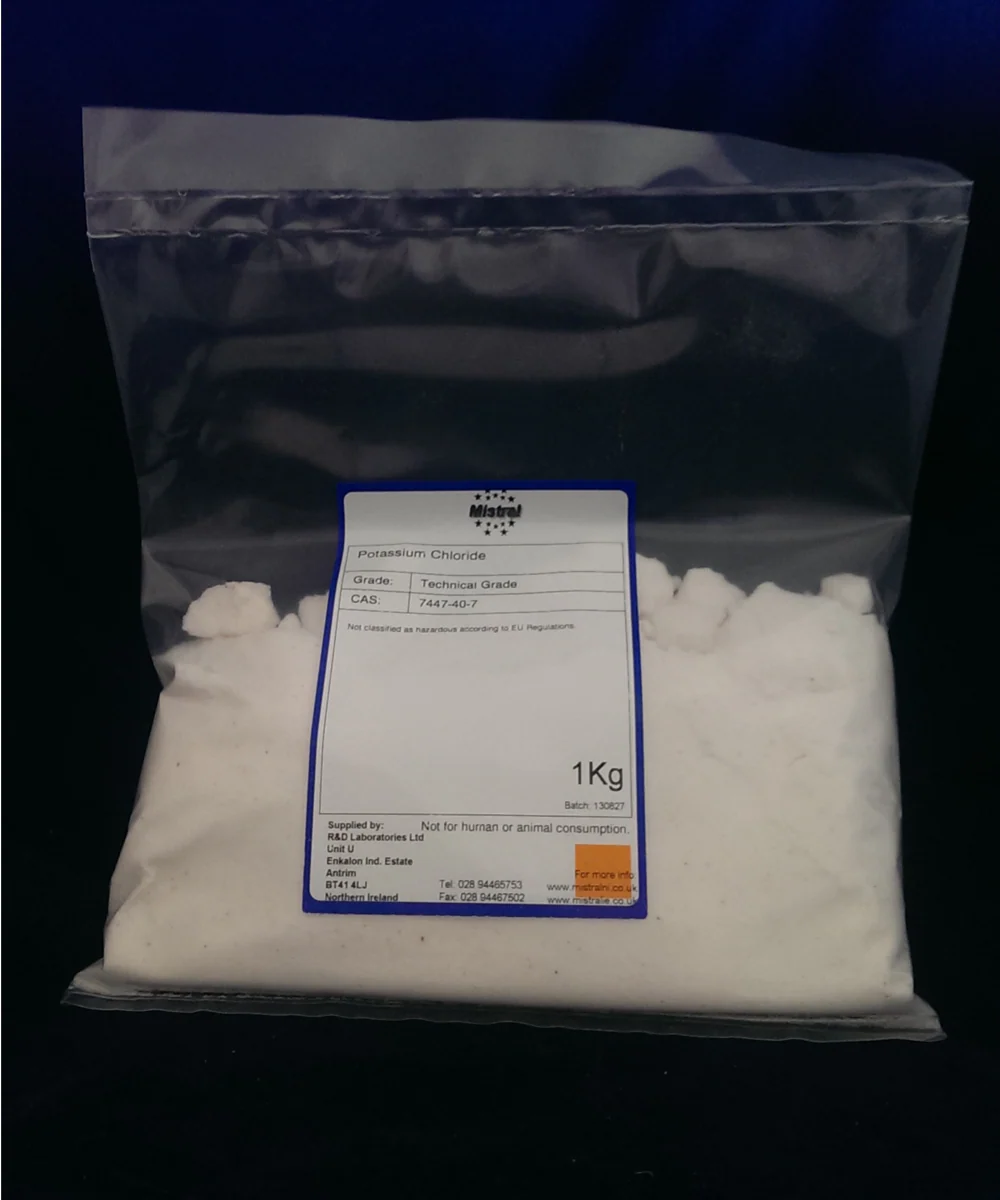
Potassium Chloride KCl
Potassium Chloride
Technical GradeProperties of Potassium Chloride:
- Formula: KCl
- CAS No. 7447-40-7
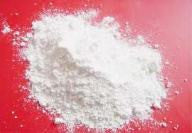
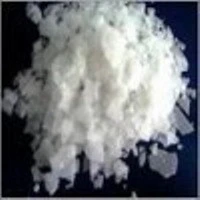
- Appearance: white crystals
- Other names: Muriate of potash
- Molecular formula: KCl
- Molar mass: 74.55 g/mol
- Density: 1.98 g/cm3
- Melting point: 770 C
- Solubility: 344g/100g H2O at 20oC
Common Uses of Potassium Chloride
1. Fertilizer
- Role: A major source of potassium, an essential nutrient for plant growth.
- Application: Widely used in agriculture as a potash fertilizer, improving crop yields by enhancing water retention, enzyme activation, and disease resistance in plants.
2. Cosmetic Industry
- suitable for use in cosmetic applications where a higher grade is required.
3. Laboratory Applications
- Laboratory reagent compound
- For manufacturing potassium and potassium hydroxide
- Used in water softener units
4. Industrial Applications
- Chemical Production: Used in manufacturing potassium hydroxide (KOH) and other potassium compounds.
- Drilling Fluids: Acts as a clay stabilizer in oil and gas drilling to prevent the collapse of well walls.
5. Water Treatment
- Regeneration of Water Softeners: Used as a substitute for sodium chloride in water softeners, exchanging potassium for calcium and magnesium ions to reduce water hardness.
6. Laboratory and Scientific Applications
- Buffer Solutions: Used to prepare buffer solutions in biochemical and pharmaceutical research.
- Heat Packs: Its exothermic dissolution makes it useful in chemical heat packs.
7. Other Applications
- Fire Extinguishers: Used in certain types of dry chemical fire extinguishers.
- Explosives: Used in some explosive formulations as an oxidizer.
- Ice Melt: Used as an ice melt compound
- Aquariums and reef tanks. (see below)
Potassium Chloride in Aquariums and Reef Tanks
Why is Potassium Chloride Used?
Potassium chloride (KCl) is used in aquariums and reef tanks primarily as a potassium supplement to maintain the health of corals, aquatic plants, and invertebrates. Potassium is an essential macro-element that plays a crucial role in various biological processes, including:
- Cellular function and osmoregulation in fish and invertebrates.
- Photosynthesis and growth in marine macroalgae and aquatic plants.
- Color enhancement in corals, particularly SPS (Small Polyp Stony) corals like Acropora.
- Electrolyte balance in freshwater and saltwater aquariums.
How is Potassium Chloride Used in Aquariums and Reef Tanks?
1. Potassium Supplementation for Reef Tanks
- Corals, especially SPS corals, require potassium to support skeletal growth and pigmentation. The blue and purple hues in corals are often influenced by potassium levels.
- In reef tanks, potassium levels should be maintained at 350–450 ppm (parts per million).
-
Dosing Instructions:
- Dissolve KCl in RO/DI (Reverse Osmosis/Deionized) water before adding to the tank.
- Dose slowly and monitor potassium levels with a potassium test kit.
- A common dosing ratio is 10-20 ppm increase per dose, but this depends on individual tank needs.
2. Potassium for Freshwater Planted Tanks
- Aquatic plants require potassium for photosynthesis and nutrient transport.
- Deficiency in potassium can cause yellowing or browning of leaves, slow growth, and weak stems.
- Potassium chloride is used as a potassium fertilizer in freshwater planted tanks, especially in high-tech CO₂-injected setups.
- Dosing Instructions:
- A general guideline is 10-30 ppm weekly, based on plant density and lighting conditions.
- Can be added via dry dosing or as a solution mixed with distilled water.
3. Electrolyte Balance for Freshwater Fish
- Potassium plays a role in osmoregulation, helping fish regulate their bodily fluids and reducing stress.
- Some aquarists use KCl to replace lost electrolytes in soft water aquariums.
- It is commonly used in discus and African cichlid tanks, where water mineral content is lower.
-
Dosing Instructions:
- Typically added at 5-10 ppm per dose, based on fish species and water conditions.
- Overdosing can lead to imbalances, affecting fish gills and aquatic plants.
4. Potassium as a Dechlorinator Alternative
- In some cases, potassium chloride is used in water softening systems as a safer alternative to sodium-based dechlorinators.
- It helps remove chlorine and chloramine from tap water when preparing water for aquariums.
-
Dosing Instructions:
- Small amounts (less than 5 ppm) are used when conditioning tap water.
Precautions When Using Potassium Chloride in Aquariums
- Test potassium levels regularly with a reliable test kit to avoid overdosing.
- Avoid excessive dosing, as high potassium levels can cause:
- Coral tissue necrosis (in reef tanks).
- Disruptions in fish osmoregulation.
- Toxicity in sensitive plants.
Conclusion
Potassium chloride (KCl) is a valuable supplement in aquariums and reef tanks, used primarily for coral health, aquatic plant growth, and fish osmoregulation. Proper dosing and monitoring ensure a balanced and thriving ecosystem, making KCl an essential component for many advanced aquarists.
PLEASE NOTE: This product is not for human consumption.
Click here to view Safety Data Sheet MSDS
Click here for Specification Data sheet
Original: $17.68
-65%$17.68
$6.19Product Information
Product Information
Shipping & Returns
Shipping & Returns
Description
Potassium Chloride
Technical GradeProperties of Potassium Chloride:
- Formula: KCl
- CAS No. 7447-40-7
- Appearance: white crystals
- Other names: Muriate of potash
- Molecular formula: KCl
- Molar mass: 74.55 g/mol
- Density: 1.98 g/cm3
- Melting point: 770 C
- Solubility: 344g/100g H2O at 20oC
Common Uses of Potassium Chloride
1. Fertilizer
- Role: A major source of potassium, an essential nutrient for plant growth.
- Application: Widely used in agriculture as a potash fertilizer, improving crop yields by enhancing water retention, enzyme activation, and disease resistance in plants.
2. Cosmetic Industry
- suitable for use in cosmetic applications where a higher grade is required.
3. Laboratory Applications
- Laboratory reagent compound
- For manufacturing potassium and potassium hydroxide
- Used in water softener units
4. Industrial Applications
- Chemical Production: Used in manufacturing potassium hydroxide (KOH) and other potassium compounds.
- Drilling Fluids: Acts as a clay stabilizer in oil and gas drilling to prevent the collapse of well walls.
5. Water Treatment
- Regeneration of Water Softeners: Used as a substitute for sodium chloride in water softeners, exchanging potassium for calcium and magnesium ions to reduce water hardness.
6. Laboratory and Scientific Applications
- Buffer Solutions: Used to prepare buffer solutions in biochemical and pharmaceutical research.
- Heat Packs: Its exothermic dissolution makes it useful in chemical heat packs.
7. Other Applications
- Fire Extinguishers: Used in certain types of dry chemical fire extinguishers.
- Explosives: Used in some explosive formulations as an oxidizer.
- Ice Melt: Used as an ice melt compound
- Aquariums and reef tanks. (see below)
Potassium Chloride in Aquariums and Reef Tanks
Why is Potassium Chloride Used?
Potassium chloride (KCl) is used in aquariums and reef tanks primarily as a potassium supplement to maintain the health of corals, aquatic plants, and invertebrates. Potassium is an essential macro-element that plays a crucial role in various biological processes, including:
- Cellular function and osmoregulation in fish and invertebrates.
- Photosynthesis and growth in marine macroalgae and aquatic plants.
- Color enhancement in corals, particularly SPS (Small Polyp Stony) corals like Acropora.
- Electrolyte balance in freshwater and saltwater aquariums.
How is Potassium Chloride Used in Aquariums and Reef Tanks?
1. Potassium Supplementation for Reef Tanks
- Corals, especially SPS corals, require potassium to support skeletal growth and pigmentation. The blue and purple hues in corals are often influenced by potassium levels.
- In reef tanks, potassium levels should be maintained at 350–450 ppm (parts per million).
-
Dosing Instructions:
- Dissolve KCl in RO/DI (Reverse Osmosis/Deionized) water before adding to the tank.
- Dose slowly and monitor potassium levels with a potassium test kit.
- A common dosing ratio is 10-20 ppm increase per dose, but this depends on individual tank needs.
2. Potassium for Freshwater Planted Tanks
- Aquatic plants require potassium for photosynthesis and nutrient transport.
- Deficiency in potassium can cause yellowing or browning of leaves, slow growth, and weak stems.
- Potassium chloride is used as a potassium fertilizer in freshwater planted tanks, especially in high-tech CO₂-injected setups.
- Dosing Instructions:
- A general guideline is 10-30 ppm weekly, based on plant density and lighting conditions.
- Can be added via dry dosing or as a solution mixed with distilled water.
3. Electrolyte Balance for Freshwater Fish
- Potassium plays a role in osmoregulation, helping fish regulate their bodily fluids and reducing stress.
- Some aquarists use KCl to replace lost electrolytes in soft water aquariums.
- It is commonly used in discus and African cichlid tanks, where water mineral content is lower.
-
Dosing Instructions:
- Typically added at 5-10 ppm per dose, based on fish species and water conditions.
- Overdosing can lead to imbalances, affecting fish gills and aquatic plants.
4. Potassium as a Dechlorinator Alternative
- In some cases, potassium chloride is used in water softening systems as a safer alternative to sodium-based dechlorinators.
- It helps remove chlorine and chloramine from tap water when preparing water for aquariums.
-
Dosing Instructions:
- Small amounts (less than 5 ppm) are used when conditioning tap water.
Precautions When Using Potassium Chloride in Aquariums
- Test potassium levels regularly with a reliable test kit to avoid overdosing.
- Avoid excessive dosing, as high potassium levels can cause:
- Coral tissue necrosis (in reef tanks).
- Disruptions in fish osmoregulation.
- Toxicity in sensitive plants.
Conclusion
Potassium chloride (KCl) is a valuable supplement in aquariums and reef tanks, used primarily for coral health, aquatic plant growth, and fish osmoregulation. Proper dosing and monitoring ensure a balanced and thriving ecosystem, making KCl an essential component for many advanced aquarists.
PLEASE NOTE: This product is not for human consumption.
Click here to view Safety Data Sheet MSDS
Click here for Specification Data sheet